The Logistics Rhyme
Caregiving across complex medical conditions—and the unequal distribution of compassion
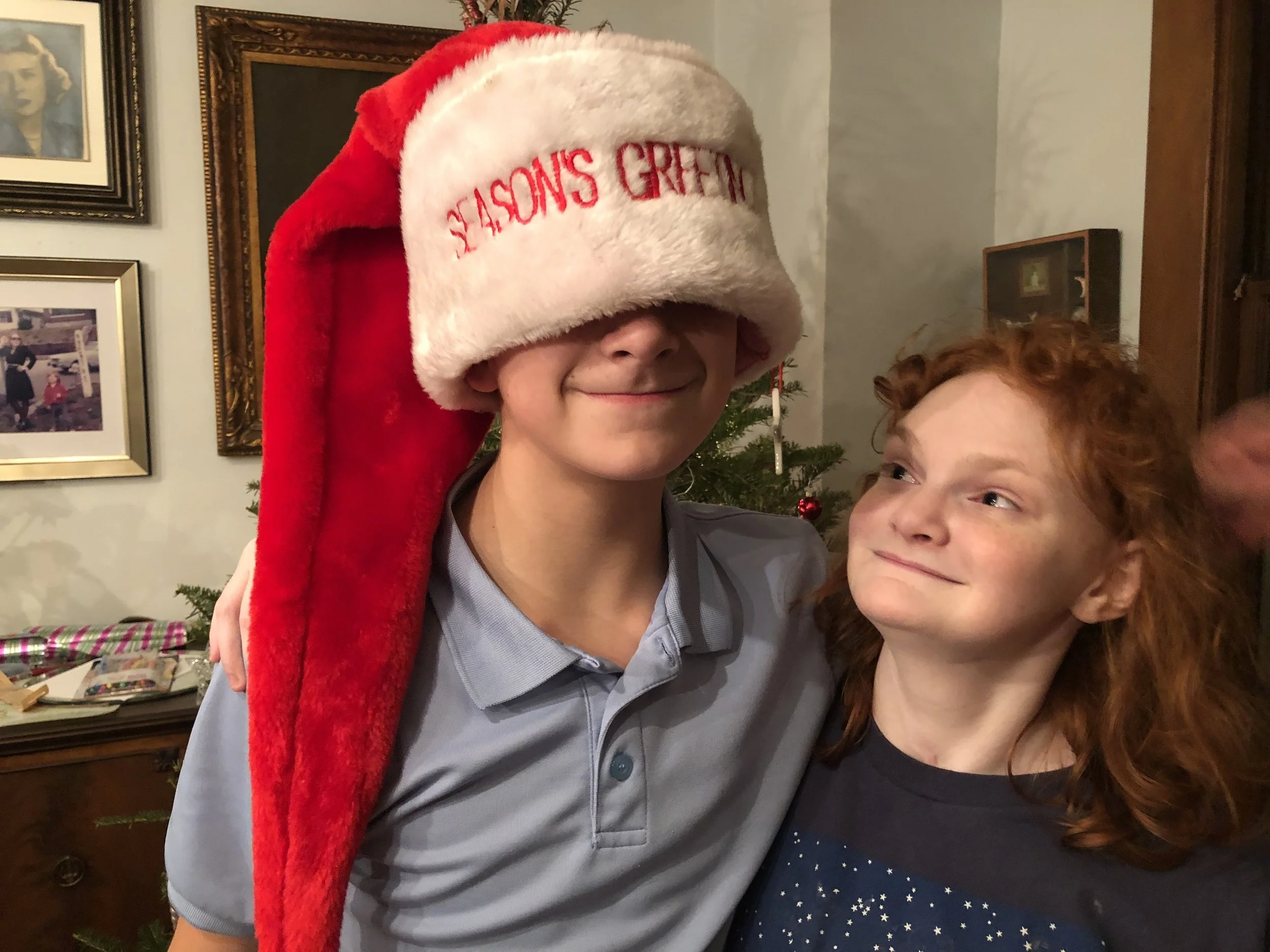
Fierce Mamas began, in part, with something I could not stop noticing.
Caring for Virginia Grace and caring for Jack required many of the same skills.
Their lives were not the same. Their medical conditions were not the same. The dangers, decisions, and possible outcomes were not interchangeable. I would never want to flatten either of them into a convenient comparison.
But the logistics rhymed.
There were specialists, medications, insurance battles, school meetings, emergency rooms, waiting lists, medical records, phone calls, appeals, and hours spent searching for answers that should not have been so difficult to find. There was the constant need to translate between people and systems that seemed incapable of speaking to one another.
There was always another form, another appointment, another person who needed the entire history explained from the beginning.
And there was always someone in the family expected to hold the whole fragmented arrangement together.
Virginia Grace has a constellation of complex medical and developmental conditions. She has Pierre Robin syndrome and a duplication on her fourteenth chromosome so rare that it is unnamed and, when identified, had not previously been recorded. She has undergone more than thirty surgeries, once had a tracheostomy, receives all of her nutrition through a feeding tube, has significant gastrointestinal conditions including ulcerative colitis, and needs assistance with daily living.
She also experiences significant sensory sensitivities and struggles with depression, anxiety, and obsessive-compulsive disorder. Virginia Grace identifies as autistic—a description her psychiatrist agrees is useful shorthand for aspects of how she experiences and moves through the world—although she does not have a formal autism diagnosis.
No single diagnosis explains the whole of Virginia Grace. Her care has always required people willing to look beyond individual specialties and understand how her medical, developmental, sensory, and emotional needs intersect.
Jack lived with borderline personality disorder, complex post-traumatic stress disorder, learning disabilities, anxiety, depression, and substance use disorder. His conditions affected how he learned, understood himself, regulated emotion, formed relationships, responded to trauma, and tried to survive unbearable internal pain.
No single diagnosis explained the whole of Jack, either.
Their conditions were profoundly different. So were their abilities, vulnerabilities, and needs. But caring for each of them required an eerily familiar kind of fluency.
Learn the language. Find the specialist. Keep the records. Watch for changes. Question the dosage. Call the insurer. Appeal the denial. Wait for the appointment. Try to determine whether the crisis is serious enough for the emergency room—and whether the emergency room will know what to do once you arrive.
Become fluent in systems you never asked to join.
Make impossible decisions with incomplete information.
Try to keep someone you love safe.
What differed dramatically was the response surrounding that care.
With Virginia Grace, people generally recognize me as a caregiver. They might not have understood the complexity of her life, and compassion did not magically produce adequate services, competent providers, respite, or anything resembling a functional system. Pity could be its own diminishment. Good intentions were not the same as meaningful support.
But the basic moral premise was usually intact: Virginia Grace had medical conditions. She deserved care. Our family was doing something difficult and loving.
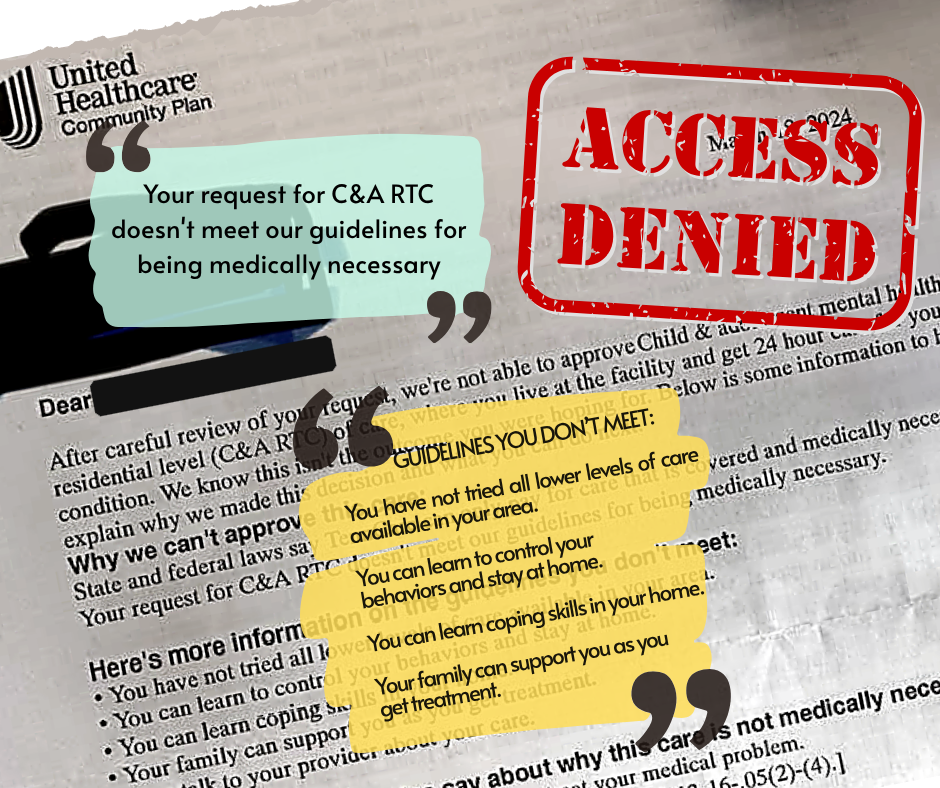
With Jack, that premise was much less secure.
Mental illness and substance use disorder attracted suspicion. Questions about treatment were accompanied by questions about responsibility. Had we missed something? Had we done too much? Had we not done enough? Were we helping, rescuing, interfering, or enabling? Why couldn’t we make him accept the right kind of help? Why couldn’t he make better choices?
The questions did not always arrive as accusations. They did not have to. Families learn to hear the judgment embedded in the language.
Caregivers navigating mental illness and substance use disorder are often required to prove not only that their loved one needs care, but that the family itself is worthy of compassion. We become defendants in an invisible trial, presenting evidence that we tried hard enough, set the right boundaries, made the right calls, and understood the ever-shifting rules.
The same persistence that made me a devoted advocate for Virginia Grace could make me look controlling when I advocated for Jack. The same vigilance could be interpreted as love in one room and dysfunction in another.
The caregiving labor was remarkably similar. The moral judgment attached to it was not.
This is one reason I wrestle with the term behavioral health. It is useful when naming a particular service system, funding stream, or administrative category. But it can be a dangerous way to describe a person. “Behavioral” subtly relocates illness into conduct. It suggests that the central problem is what someone is doing—and that different behavior might solve it.
Jack lived with mental illness and substance use disorder. Our family navigated the behavioral healthcare system. Those statements are not interchangeable.
People have complex medical conditions. Systems divide their care into categories.
Those categories affect far more than which office receives the referral. They influence whose suffering is believed, whose behavior is feared, whose family is trusted, and who is presumed innocent enough to deserve help.
When I first imagined Fierce Mamas, I wanted caregivers navigating mental illness and substance use disorder to be able to borrow some of the goodwill more readily extended to families facing conditions like Virginia Grace’s.
I still understand the impulse behind that thought. I wanted families like ours to enter a room without first having to defend the person they loved or explain why they had not been able to fix an illness through superior parenting, firmer boundaries, or sufficient force of will.
But goodwill is not a finite resource that one group possesses and another must borrow.
The deeper work is to question why we distribute it according to diagnosis in the first place.
Why should a chromosomal difference invite compassion while substance use disorder invites blame? Why do we understand some symptoms as evidence of illness and others as evidence of character? Why is fierce parental advocacy praised in one medical system and treated as part of the pathology in another?
And what might happen if caregivers began comparing notes across those boundaries?
A mother who has spent years fighting for an appropriate education already understands what it means to confront a system that says no through delay, attrition, and incomprehensible paperwork. A parent trying to secure addiction treatment understands what it means to search for care while time becomes dangerous. A sibling coordinating specialists understands the exhaustion of becoming the only person who can see the whole picture.
The details matter. The conditions must not be collapsed into one another. But recognition does not require equivalence.
It requires enough proximity to say: I know something about that labor. I recognize what the system is asking you to carry. I believe you when you say it is too much.
My dream for Fierce Mamas was not simply to make one group more sympathetic to another. It was to create the conditions for mutual advocacy.
Caregivers of people with disabilities and uncommon medical conditions know what happens when expertise is concentrated in families because institutions have failed to develop it. Families navigating mental illness and substance use disorder know what happens when stigma becomes part of the care infrastructure. Each population holds knowledge the other needs.
Together, we might become harder to divide into the deserving and undeserving, the admirable and suspect, the tragic and blameworthy.
We might also begin asking better questions.
Not: What is wrong with this family?
But: What has this family been required to become in order to survive?
Not: Why won’t this person comply?
But: What forms of care are actually available, accessible, appropriate, and worthy of trust?
Not: Which category does this person belong in?
But: What does this person need, and why has the system made that need so difficult to meet?
This is not an argument for erasing diagnoses. Specific conditions require specific knowledge, treatment, accommodations, and resources. Language can open doors, establish rights, and help people understand their own lives.
It is an argument against allowing those categories to determine the limits of our compassion.
Fierce Mamas began because I had lived in two caregiving worlds that institutions treated as fundamentally separate. From inside them, I could see their differences clearly. I could also see their shared machinery: the waiting, searching, coordinating, documenting, improvising, and loving someone through systems that rarely understood the whole person.
The logistics rhymed.
I began to wonder whether the caregivers might recognize one another, too.