The Care Creates the Kinship
I couldn’t sleep.
Not because I wasn’t exhausted. I was.
I had spent nearly two years living on high alert, always waiting for the next phone call, the next crisis, the next emergency room, the next treatment meeting, the next impossible decision.
I had spent those years largely alone with Jack—me against the world, arguing for his worth. Every day felt like another attempt to prove that he was worthy of care, worthy of treatment, worthy of one more chance. Worthy of being seen as a child instead of a diagnosis, a liability, or a lost cause.
I don’t think I realized how much adrenaline had been carrying me until it suddenly had nowhere left to go.
When Jack died, the fight disappeared. Not because I stopped believing he deserved to live, but because there was no longer anyone to fight for. Or at least, that’s how it felt.
For the next year, I was alone without him.
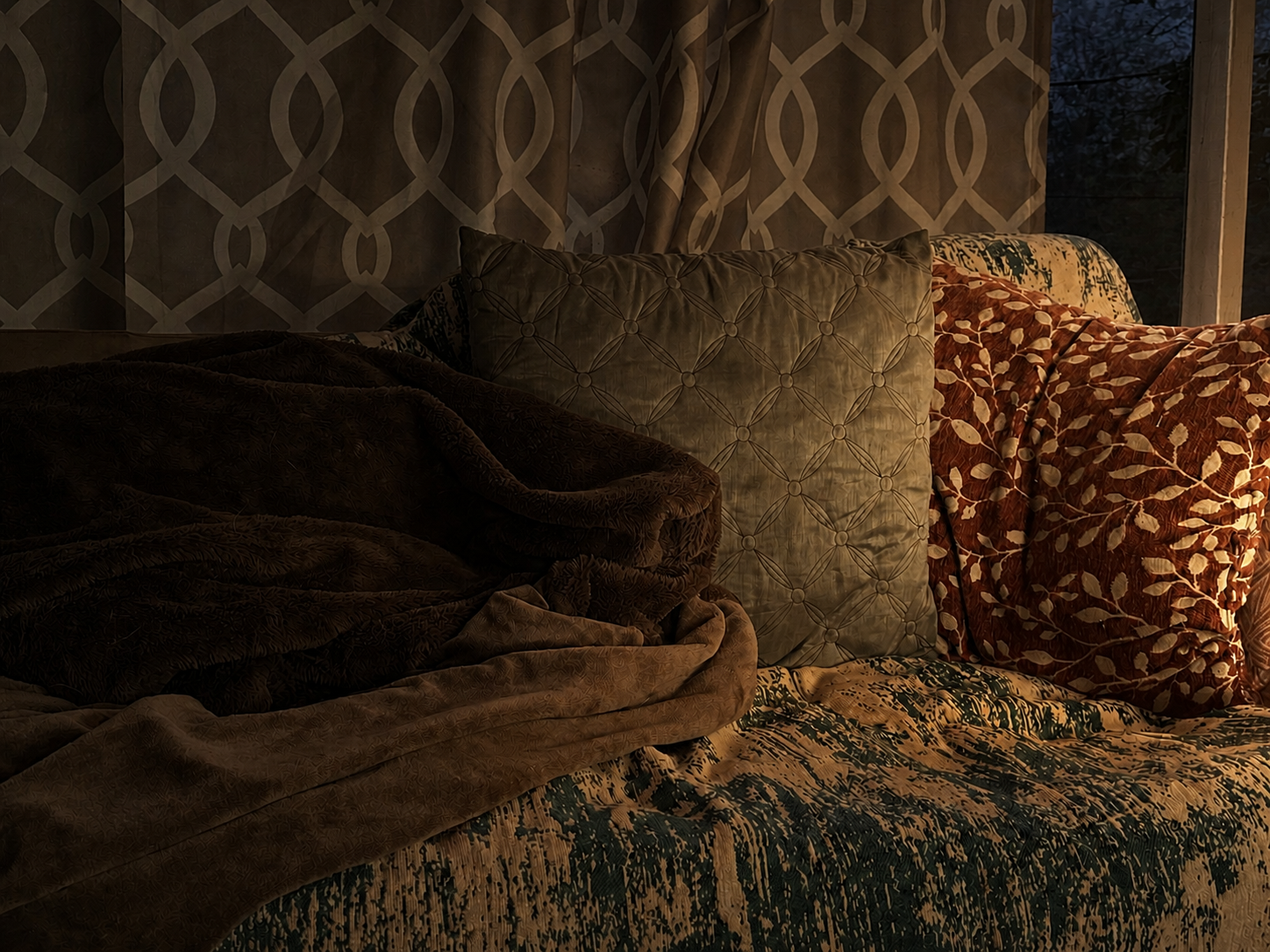
I barely remember what I did. Grief has a way of dissolving time. I remember sleeping on the couch because I was too angry to sleep beside my husband. I remember the indentation my body left in the cushions. Day after day, week after week, I occupied the same small hollow until it seemed as though the couch had molded itself around my grief, pressed into shape by my anger.
The isolation had changed form, but it had not lifted. I wasn’t simply mourning. I was collapsing after two years of standing watch.
The cards stopped coming. The flowers became vases of bare twigs. The phone grew quiet. The rest of the world was moving again, and I could not understand how.
I replayed every decision, every treatment plan, every denial, every moment I wondered whether I should have pushed harder or chosen differently. Underneath it all was a terrifying thought: the future felt too long to survive.
What makes grief so bewildering is that it doesn’t make room by taking love away. It asks your heart to hold even more. While I was drowning in the loss of Jack and, only months later, his former girlfriend Marleigh, I also felt swollen with love for Virginia Grace. She was still here. She still needed me.
I couldn’t bring Jack back. I couldn’t keep Marleigh here. But Virginia Grace was alive, and love still required something of me.
One night, lying awake in the dark, my mind began racing with the kind of electricity that makes sleep impossible. Beneath the exhaustion and helplessness, I recognized something I hadn’t felt in months.
It wasn’t hope.
It was defiance.
It was the old impulse to refuse what the world had decided about whose life mattered.
I needed community. But I was not looking only for a place where we could recount what had happened to us, necessary as that kind of witness can be. I wanted to find people who might make something from what we had endured.
Knowledge from bewilderment. Art from paperwork. Action from helplessness. Belonging from isolation.
Not because creation would redeem the grief or make the systems less cruel. It would simply refuse to let grief, rage, and bureaucracy be the only things those systems produced.
So I opened my laptop and navigated to GoDaddy.
Almost as a joke, I typed fiercemamas.org.
It was available.
Looking back, it would be easy to make buying the domain name sound like the beginning of a plan. It wasn’t. It was simply the smallest thing I could do.
“Mama is the sleepless nights. Mama is learning medication schedules by heart. Mama is sitting through another IEP meeting. Mama is arguing with the insurance company one more time. Mama is waiting in emergency rooms. Mama is showing up in court. Mama is making impossible decisions with incomplete information. Mama is burying a child. Mama is surviving long enough to tell the truth about it.”
I couldn’t rebuild the treatment system before morning. But I could buy a domain name.
Only later did I begin to understand what I meant by mama.
It was not a title Jack used for me. I never asked him to call me mama, and I never introduced myself as his mother. I was—I am—his aunt. I was also his legal guardian.
But in hospitals, schools, and treatment settings, people often used “Mom” as shorthand for the woman beside him—the person answering questions, signing forms, making decisions, and trying to keep him safe.
Jack and I did not stop every conversation to explain the full architecture of our family. We did not owe every new person the most painful parts of his story simply because they had made an ordinary assumption about who we were to each other.
The necessary distinctions took care of themselves. I crossed through Mother and wrote Guardian on the forms. I handed over the court orders that justified my presence in the room and defined the legal arrangements for decision-making.
When providers asked questions about family medical history that I could not answer, I said so. Biology mattered where biology was medically relevant. It simply did not tell the whole story of who we were to each other.
The harder word has always been son.
Jack was my nephew. That is true, and it matters. He was also the child I parented. I sat beside him in emergency rooms, attended school meetings, argued with insurers, showed up in court, and made the mama decisions about his life.
Nephew cannot hold all of that. Neither, perhaps, can son. One names the family relationship we were given; the other names something we became.
I still feel the friction between them. When I call Jack my son, I am not trying to revise his biology, erase his mother, or make our family history less complicated than it was. I am trying to name a relationship for which English has given me no clean word.
Jack seemed more at ease with the complexity than I have been. He called Kalki and me his parents and Kalki’s parents his grandparents. He called Virginia Grace his sister. He knew a family could hold more than one kind of bond—and that one did not have to erase another.
Kinship language has never mapped neatly onto biology. Across cultures, words translated as mother, father, aunt, and uncle have also named responsibility, authority, generation, and belonging. In Hawaiian, for example, makuahine can name a mother, aunt, female cousin, or another woman of the parents’ generation.
I did not encounter that understanding only as anthropology. I lived inside it.
Many of the people who most fully welcomed Jack into our family were members of Kalki’s family, many of whom are queer. They accepted him without hesitation; blood did not determine his belonging. He called Kalki’s brothers “uncle.” He called their husbands “uncle,” too. They were his uncles because they loved him and showed up as uncles.
The same was true of the neighbors who stood beside us and said, “We can do this.”
The we mattered. It enlarged the family.
I had also heard Mama used in some African and African diasporic communities as a term of respect—an acknowledgment of a woman’s authority, care, or place within a community, not necessarily a statement about whose child she had given birth to.
I do not invoke these traditions as permission. They were part of the linguistic and relational world that taught me to recognize kinship as something people also make.
That understanding is central to Fierce Mamas.
We do not ask what title you held before the caring began. You may be a mother, father, aunt, uncle, sibling, grandparent, guardian, partner, friend, neighbor, chosen family, or someone for whom the forms have no adequate box.
No one has to prove kinship before their care counts.
The care creates the kinship.
That is what mama means in this name—not a claim about birth, but a recognition of relationship and responsibility.
Mama is a practice.
Mama is the doing.
Mama is the sleepless nights. Mama is learning medication schedules by heart. Mama is sitting through another IEP meeting. Mama is arguing with the insurance company one more time. Mama is waiting in emergency rooms. Mama is showing up in court. Mama is making impossible decisions with incomplete information. Mama is burying a child. Mama is surviving long enough to tell the truth about it.
I was naming the work.
And fierce came from realizing that love sometimes reaches a point where kindness alone is no longer enough.
It’s an old word, with roots leading back toward wildness—the untamed, the feral, the animal. Along the way, it also carried meanings of pride, boldness, and might before English narrowed it toward cruelty and savage force.
Centuries later, queer culture—particularly Black and Latino ballroom culture—gave fierce another life. It became a word for audacious presence, survival, self-possession, and power that refuses to make itself smaller.
I am not queer. But queer people are part of my real and chosen family, and queer culture helped shape the world in which I learned what family, survival, and belonging could mean.
That meaning of fierce felt righteous.
Not violence. Not vengeance. Not cruelty. Not the satisfaction of being right.
Protection. Attention. Presence. Refusal.
Fierce is powerlessness turned into action.
And then there are the words together.
Fierce Mama.
You cannot say it entirely solemnly. Imagine RuPaul saying it.
The name has a little strut in it. A little camp. It is both a promise and a persona: the caregiver who knows the medication list, has the court order in her bag, and is no longer asking permission to be taken seriously.
Mama names the relationship. Fierce names how love moves when that relationship is threatened.
Together, the words hold tenderness and authority, defiance and delight. They acknowledge the gravity of the work without surrendering every scrap of joy, beauty, or style to it.
Because if we are going to confront the machinery of institutional neglect, we may as well make an entrance.
I’ve thought about Steel Magnolias more than once this year. My aunt has called Virginia Grace and me steel magnolias since Virginia Grace was itty-bitty—a description of the toughness it has taken to fight for her life while trying to preserve something tender inside our own.
But when I think about M’Lynn now, I think less about toughness than about her refusal to leave Shelby.
Her love is not uncomplicated. It crowds. It insists. It sometimes mistakes protection for control. She does not always know where her daughter ends and her own fear begins.
But M’Lynn stays.
When there is no more fixing to be done, no decision left to make and no argument left to win, she holds Shelby’s hand. She accepts the terrible privilege of bearing witness to her child’s beautiful wildness all the way to the end.
And afterward, she rages.
The women around her do not rush to explain or ask her to make her grief easier for them to witness. They make room for the anger, the absurdity, and eventually even the laughter.
I’ve come to think that is one of the holiest things people can do for one another: witness the unbearable without trying to make it more comfortable.
Stay.
But do not mistake staying for stillness.
Move.
Over the past year, I’ve realized that fierceness cannot be the whole story. Fierce Mamas began in rage, but it cannot live on rage alone.
Rage can expose injustice. It can refuse silence. It can point us toward the places where systems have failed. But sustaining a life requires something else: wonder, beauty, laughter around a table, the quiet miracle of someone saying, “Me too,” and the wonderful absurdity of making art from denial letters.
Come make something so unexpectedly beautiful that, for a few hours, the paperwork loses its authority over you.
I’ve learned that the opposite of despair isn’t optimism. It’s creation. It’s paying attention. It’s refusing to let bureaucracy have the final aesthetic word.
People sometimes tell me they don’t know how I’ve lived the parenting life I’ve lived. I always tell them the same thing: I try to do the next right thing.
Buying that domain name was one of those next right things.
I had no strategic plan. No organizational chart. No idea that Jack’s Last Mile would eventually lead to Gather, or that the effort to understand how families navigate care would lead toward provider transparency, implementation science, judicial elections, or mayoral policy. I couldn’t have imagined that art, research, advocacy, and storytelling would turn out to be different dialects of the same language.
I wasn’t building programs. I was following questions. The questions changed, the people changed them, and in the process, the work changed me.
I closed my laptop sometime before dawn.
Outside, nothing had changed. Jack was still gone. Marleigh was still gone. The systems that had failed our family were still exactly as I had left them a few hours earlier.
But something inside me had shifted.
I wasn’t wandering anymore.
I had a direction.
Looking back, I don’t think Fierce Mamas began because I had an idea. It began because I needed somewhere for my love to go—and people with whom I could make something from it.
I just didn’t know yet how many people had been carrying that same unbearable love alone.